
Integral Designs International Studio Pvt. Ltd.
E90 Anand Niketan New Delhi, DL, 110021
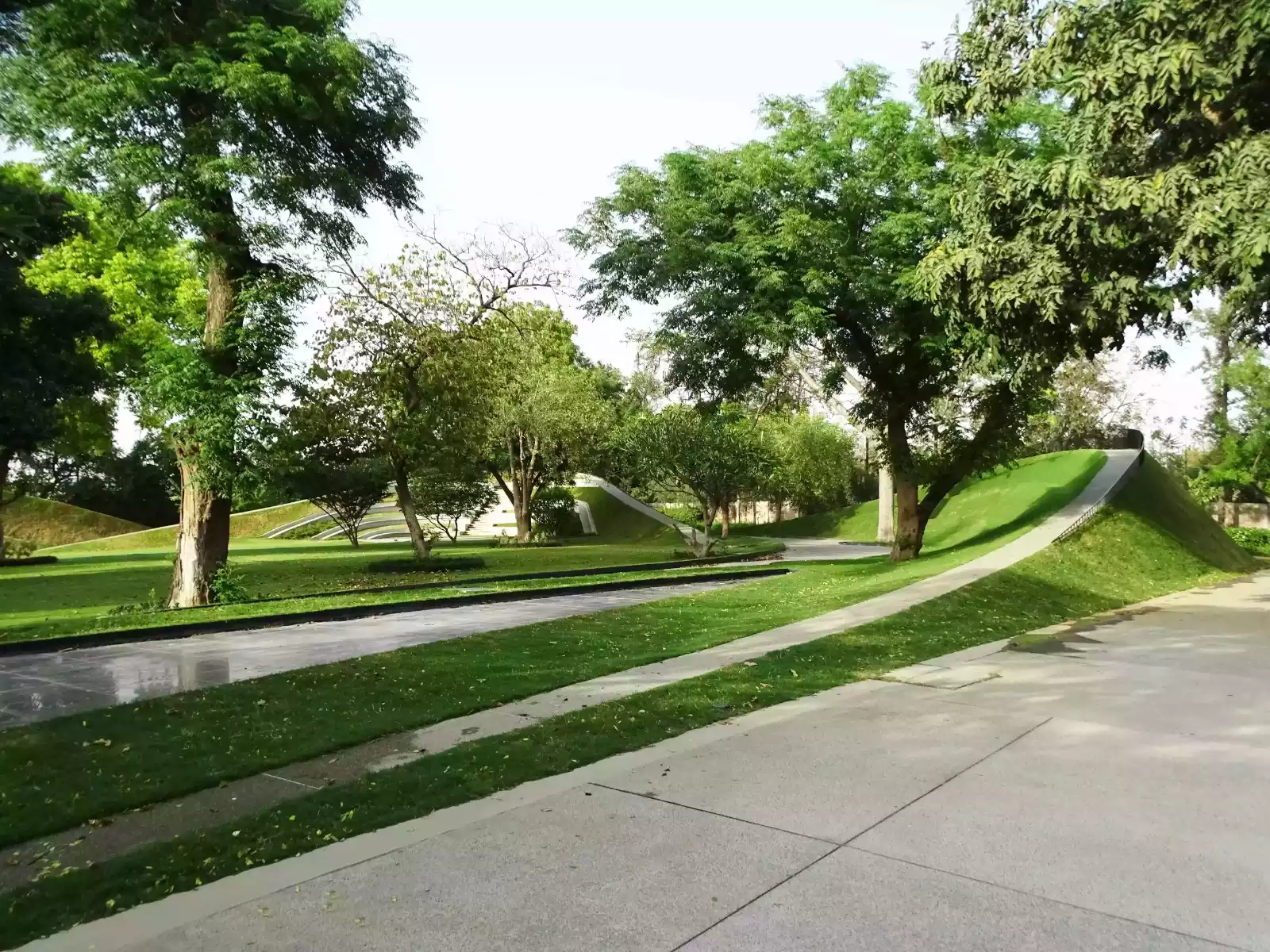
Integral Designs, in collaboration with landscape designer Jencks Squared and the site team, has created a family retreat in South of Delhi at Chattarpur. This property highlights clever integration of architectural design with the natural landscape of the existing land.
The property is designed as a complex narrative. Starting with placement of the residence around magnanimous landforms to create an experience that performs as a ‘sanctuary’ with a sense of calmness and stillness. The design also seeks a perfect amalgamation between the outside gardens and each individual room of the villa to highlight symmetry.
Moreover, the design philosophy clearly highlights the significance of preserving various natural elements while incorporating different cultural concepts like Vaastu and Chakras in modern residential design.
This blog digs deeper into the innovative approach implemented in this project to create a peaceful and harmonious living environment.
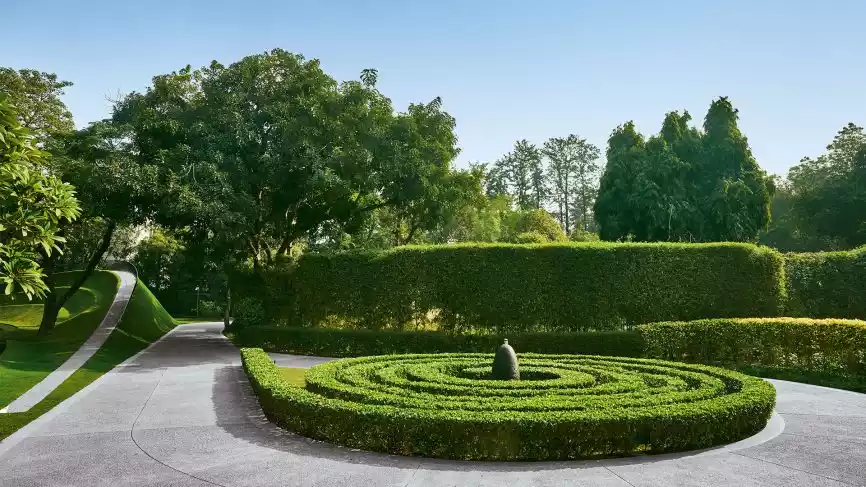
A key aspect of the project of Chattarpur Residence is the emphasis on preserving existing trees within the modern landscape spaces to maintain the natural environment and provide a sense of continuity and maturity to the landscape.
Though at a small scale, but the preservation of existing trees has led to the following:
The residence is designed to appear as if it is transpiring from the landscape as an additional aspect of the same design surface. This ensures maximum visibility anda connection between the new and old design language from all areas of the home. This seamless integration between indoor and outdoor spaces promotes a harmonious living experience for the residents.
The main intent behind proper Integration with the landscape was to foster a close connection between people and nature, promoting mental and physical health. This has also helped us enhance the aesthetic appeal of the property while supporting sustainable practices and utilizing natural elements to create a cohesive design.
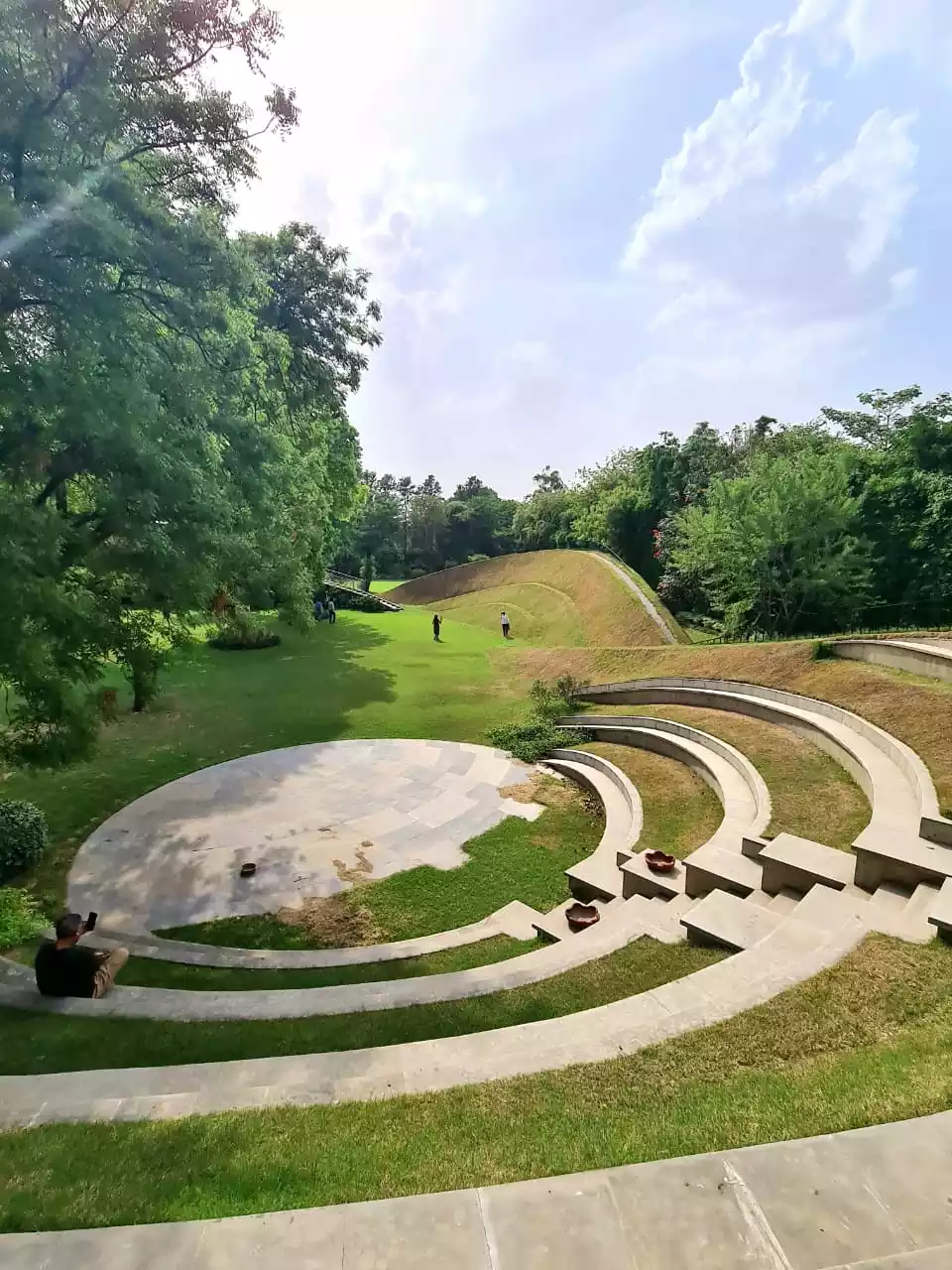
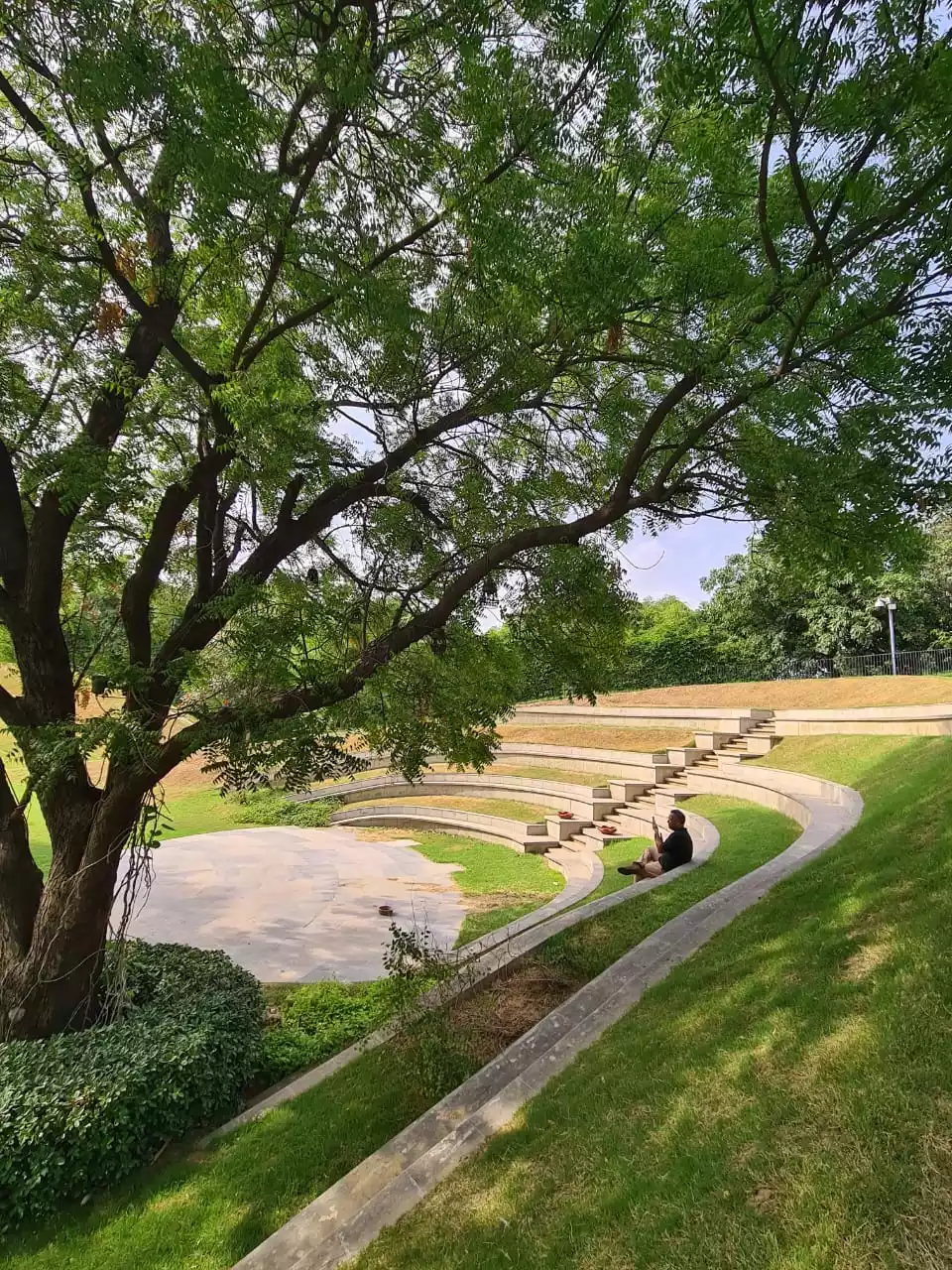
The design of the Chattarpur Residence incorporates Vaastu principles, aligning the structural aspects of the landscape design philosophy with traditional Indian architectural and astrological concepts for harmony and balance. Vaastu Shastra emphasizes the importance of directional alignments and spatial arrangements, enhancing the flow of positive energy into the residence.
The incorporation of these principles in this residence has helped us respect and preserve the cultural heritage while simultaneously promoting holistic well-being. This integration can lead to designs that are not only functional but also deeply meaningful and spiritually enriching for the inhabitants.
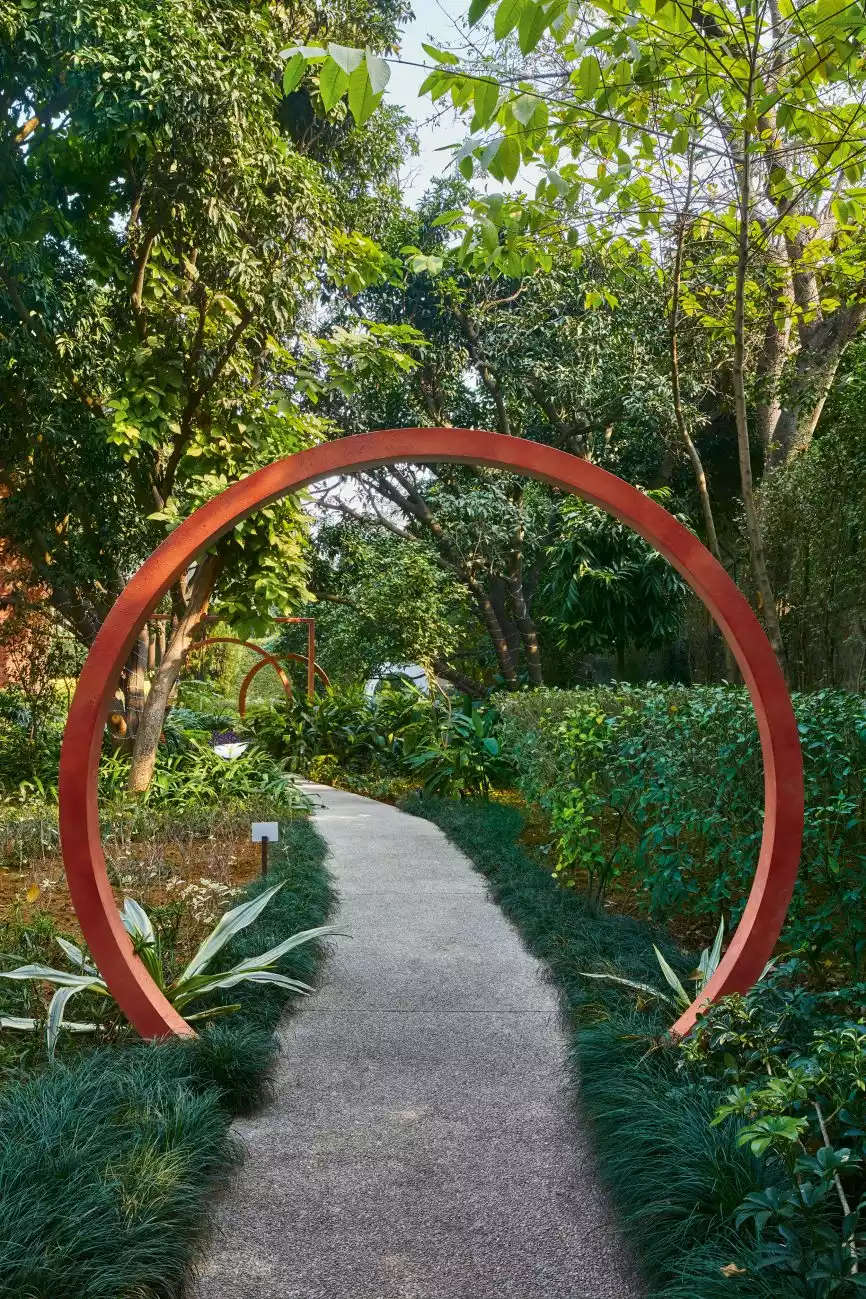
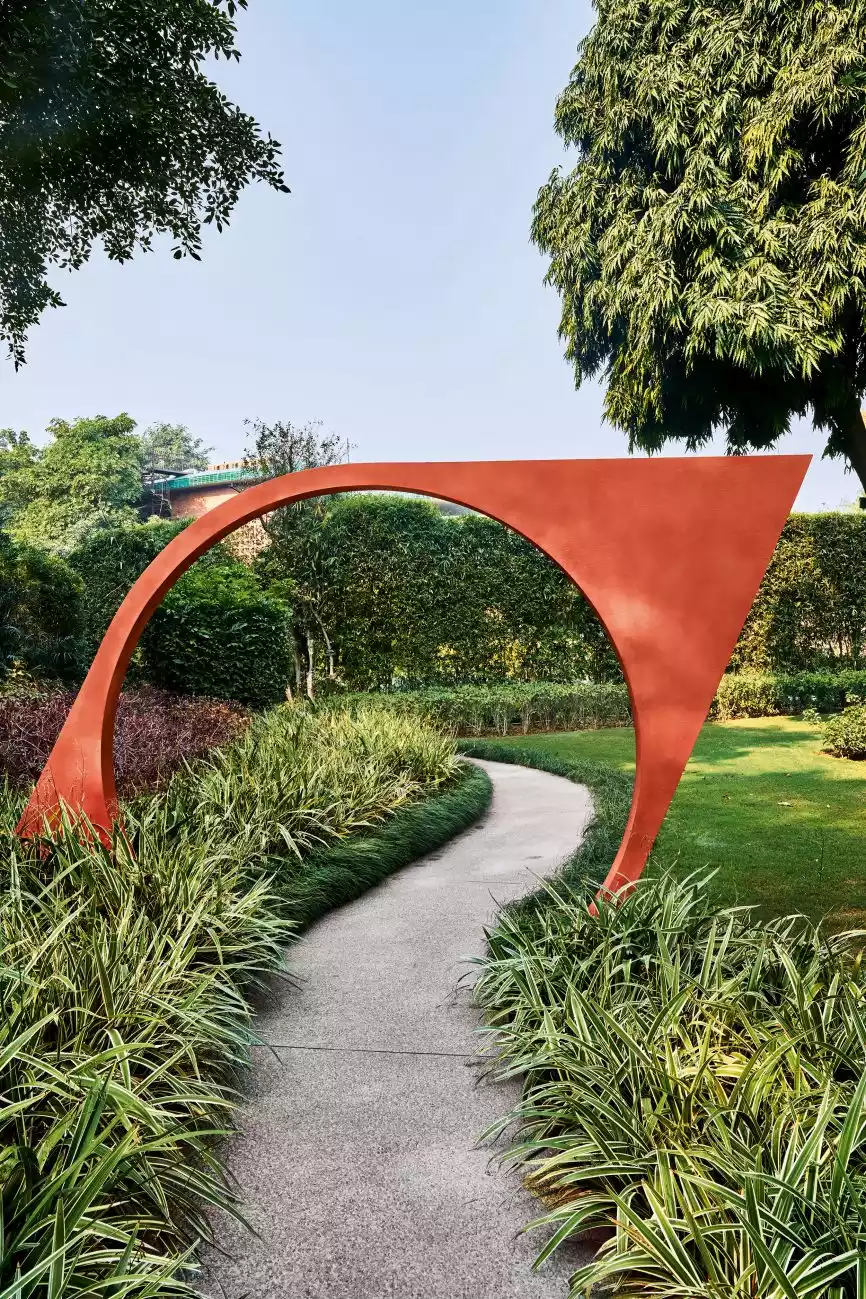
The inclusion of seven moon gates, representing the seven chakras in yogic tradition, integrates spiritual energy into the residence's design. Each gate corresponds to a specific chakra, promoting proper balance and harmony. These gates guide the residents and visitors through a journey of spiritual and physical alignment.
Moreover, the strategic location and design of each gate also resonates with the indoor spaces.With the adoption of these elements that represent spiritual and cultural beliefs, the intent was to create spaces that resonate on a deeper level with the residents. Such designs foster a sense of identity and continuity, which is increasingly valued in the diverse and globalized context of contemporary architecture.
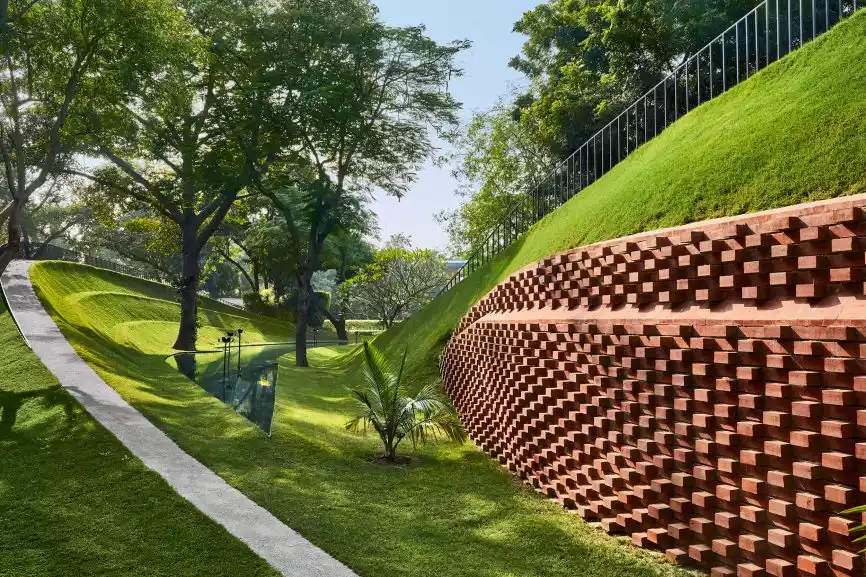
Spiralling Turfed Mounds: The five mounds symbolize life force or chakras and add a dynamic visual element to the landscape. The design of these natural forms follows the infinity shape which supports the cosmic ideology while providing natural seating areas that enhance the topography of the residence.
Amphitheatre: Scooped out of the existing natural elements on the property, this amphitheatre was designed for performing arts and small events, creating a cultural and communal space. Its unique design also adds an iconic character to the landscape.
Boulders and the Sunset Wall: The standing stones resemble lightning bolts, while the golden sunset wall was designed to capture the last rays of the sun, thus adding both aesthetic and symbolic values.
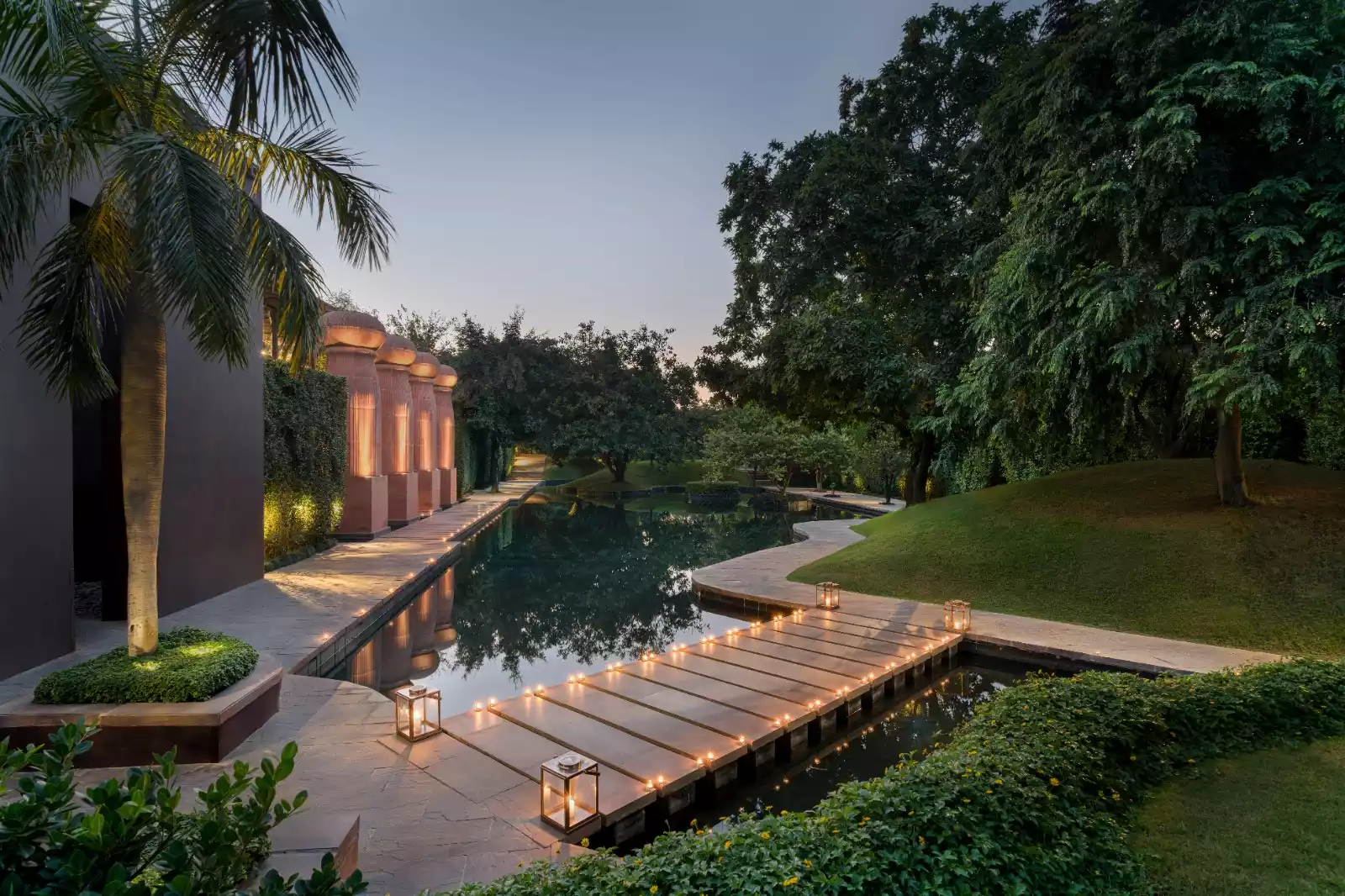
Water Features: Rills of water reflect the sky, and a fountain dedicated to Shiva enhances the tranquil atmosphere.
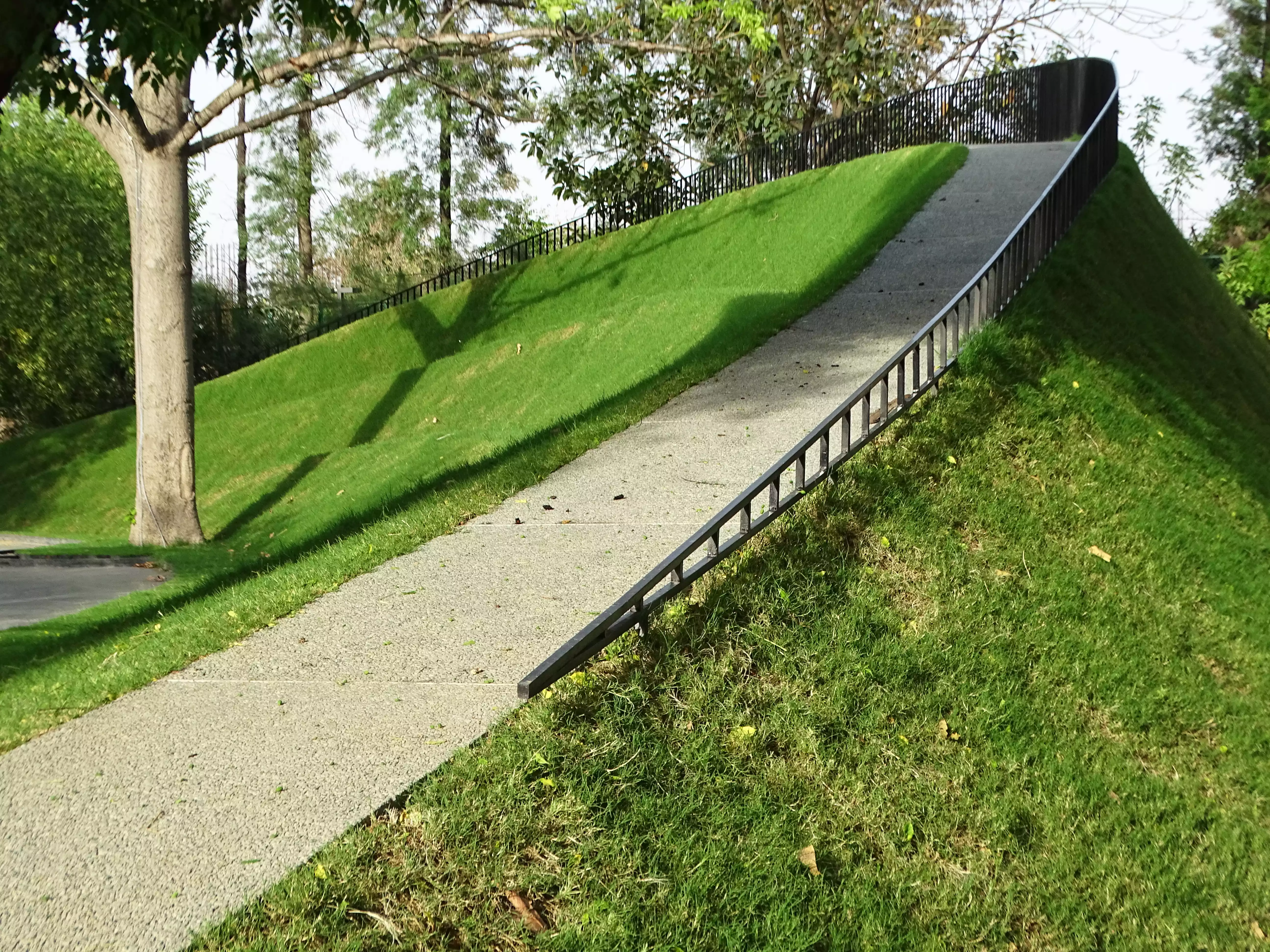
Turfed Pathway: The turfed pathway rises to the top floor of the house, providing a unique morphing moment where the land meets the sky.
Additional Features: Unique architectural features are essential in creating memorable and functional spaces. This property showcases the following additional features.
The project involved extensive discussions with the client, Shalini, and the design team to fulfill the vision of a tranquil family retreat. The collaborative approach ensured that every detail was meticulously planned and executed, resulting in a design that perfectly aligns with the client’s lifestyle and preferences.
Collaboration with clients ensures that the final design meets their needs and expectations, leading to higher satisfaction and better project outcomes.
The Chattarpur Residence project is a testament to how sustainable living can be seamlessly integrated into modern architectural design. The concept of sustainable living is not just a trend but a necessity in today's world, where environmental concerns are paramount.
Here’s a deeper look into the sustainability aspects of this project:
Sustainability is a critical aspect in contemporary landscape architecture. Integrating sustainable practices such as home gardens, rainwater harvesting, and renewable energy systems reduces environmental impact and promotes healthier living.
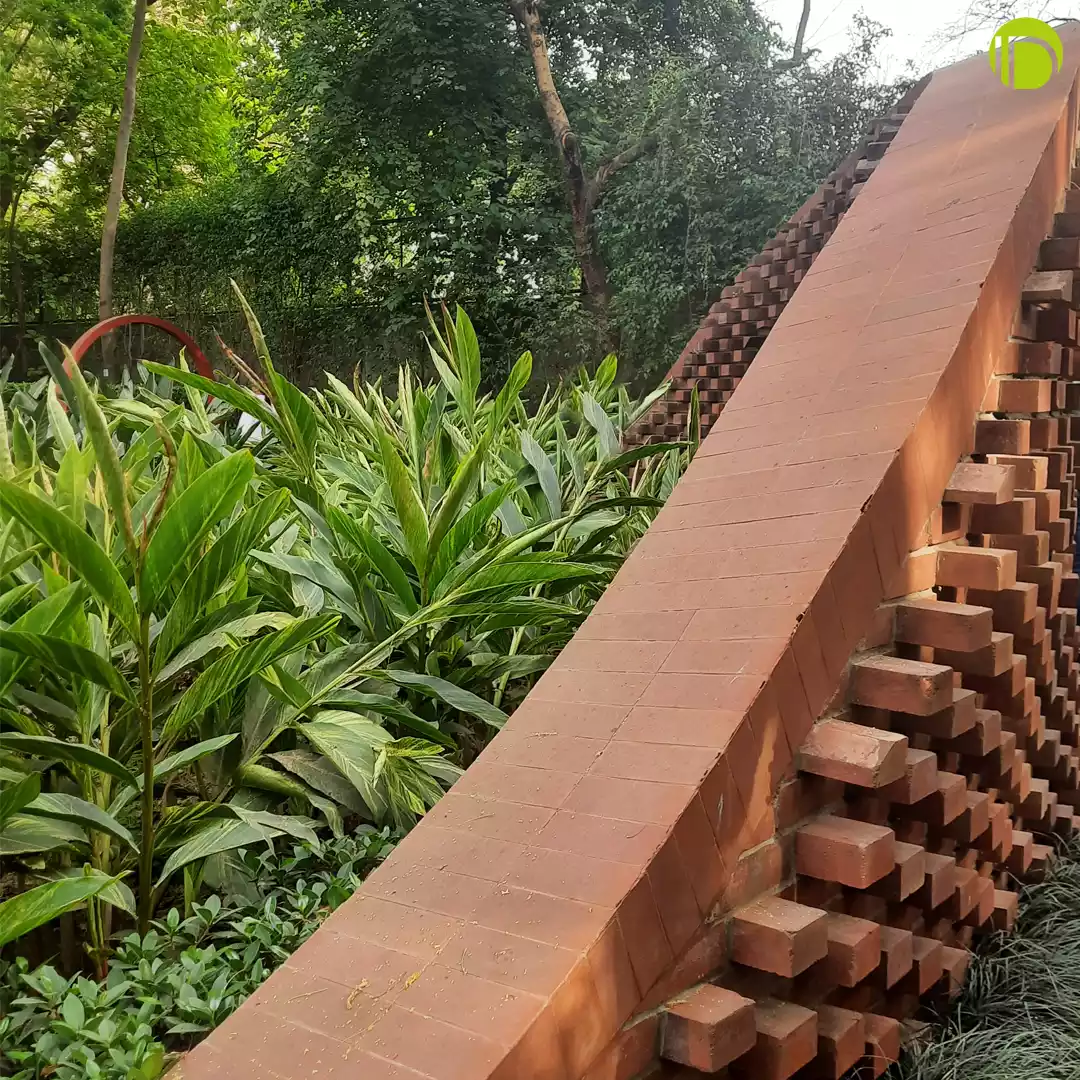
The Chattarpur Residence sets a benchmark for future architectural projects, demonstrating that luxury and sustainability can coexist harmoniously.
Innovative projects like the Chattarpur Residence highlight the importance of blending landscape design with nature. Such integration not only enhances the aesthetic and spiritual aspects but also brings out meaningfulness through the overall landscape design.
Future architectural projects should consider both design and nature to create harmonious living environments as embracing these principles can lead to healthier and happier communities.
A comprehensive strategy for the redevelopment of GPRA colonies.
A comprehensive guideline for the streets of Delhi keeping in mind the needs of all users.

E90 Anand Niketan New Delhi, DL, 110021